SC301 Clinic Stem Cell Research Center · Cell Processing Facility License No. 139
English
HomeLab Tour
( SVF Research Center )

A tour of the Stem Cell Research Center,
where cells go before surgery

The space where SVF (stem cells) is isolated, counted and stored. A walk through the SC301 Clinic Stem Cell Research Center, piece of equipment by piece of equipment.

Key points. The SC301 Clinic Stem Cell Research Center (SVF Research Center) is a research facility opened in 2007. It handles the isolation, counting, verification and storage of SVF (stromal vascular fraction) from each patient's own fat, and has analyzed about 9,000 graft retention records since 2007.

  • Designated Advanced Regenerative Medicine Institution (Ministry of Health and Welfare · Ministry of Food and Drug Safety) and licensed Cell Processing Facility
  • Recognized as a dedicated R&D department by the Ministry of Science and ICT
  • More than 10 types of SVF-related equipment, including a clean area, pass box, centrifuge, cell counter, CO₂ incubator, medical refrigerator and LN2 tank
  • SVF extraction is performed by hand, following protocol, by researchers with master's or doctoral degrees and more than 10 years of experience
  • Mean graft retention rate of 77.48% published in an SCI-indexed international journal (Annals of Plastic Surgery, 2023)
( Lab Tour )

Isolate · count · verify · store: seven key pieces of equipment

From the clean-area entrance to the −196 °C liquid nitrogen tank, follow the equipment in the order SVF passes through it.

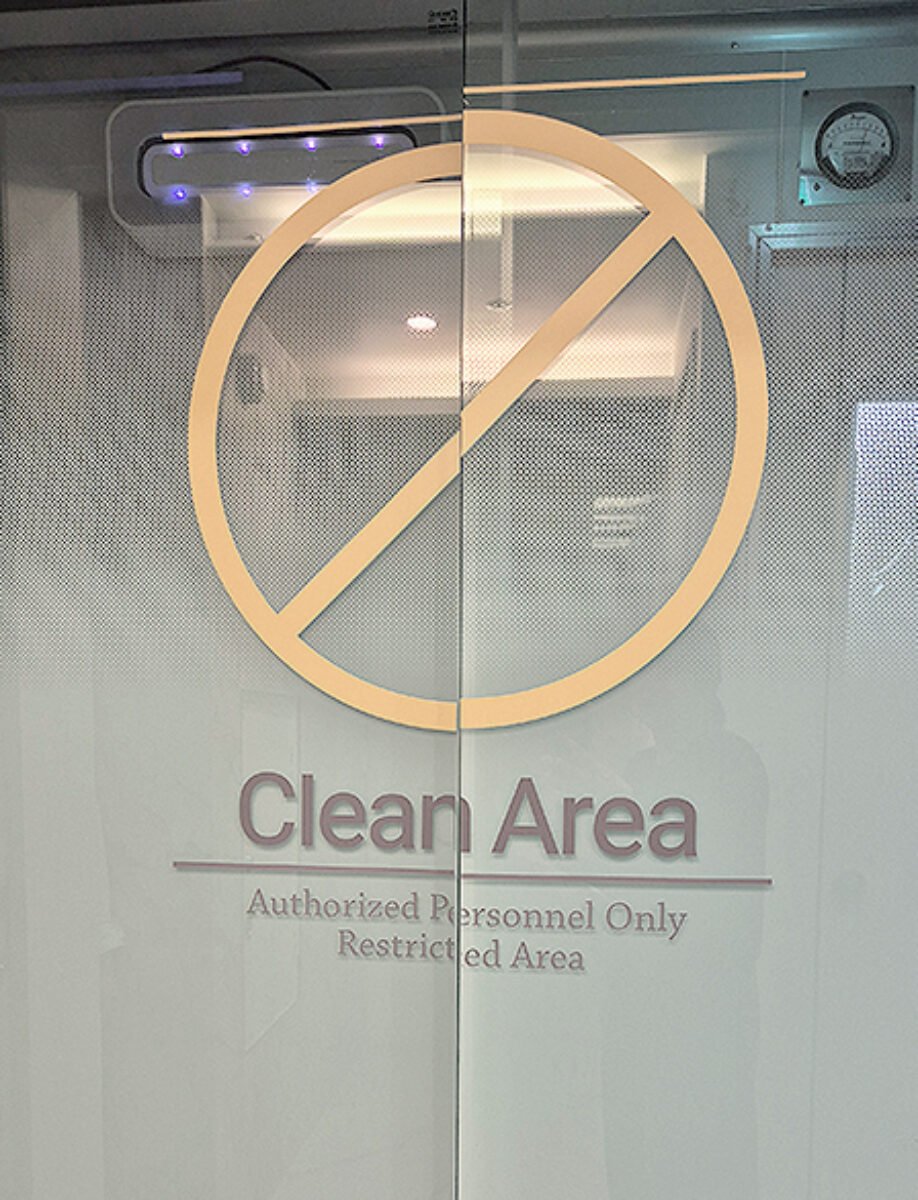
Clean-area entrance of the SC301 Clinic Stem Cell Research Center, with a differential pressure gauge and an insect trap light
Clean-area entrance. The differential pressure gauge is at upper right; the violet light at upper left is an insect trap light.
01 · Clean Area

It is different from the entrance

Why is a clean area needed?

A clean area controls airborne dust and bacteria, protecting SVF from outside contamination while it is being isolated.

The entrance to the research center reads "Authorized Personnel Only." Only authorized staff may enter.

The differential pressure gauge above the door on the right shows the difference in air pressure (pressure differential) between the inside and outside of the clean area. Researchers check this reading regularly to confirm that the air in the clean area is kept within the normal range.

The violet light above the door on the left is an insect trap light. It stops insects at the entrance before they can get into the clean area. Sterility management across the whole clinic is described on the Sterile System page.

Access controlPressure differential checkInsect trap light
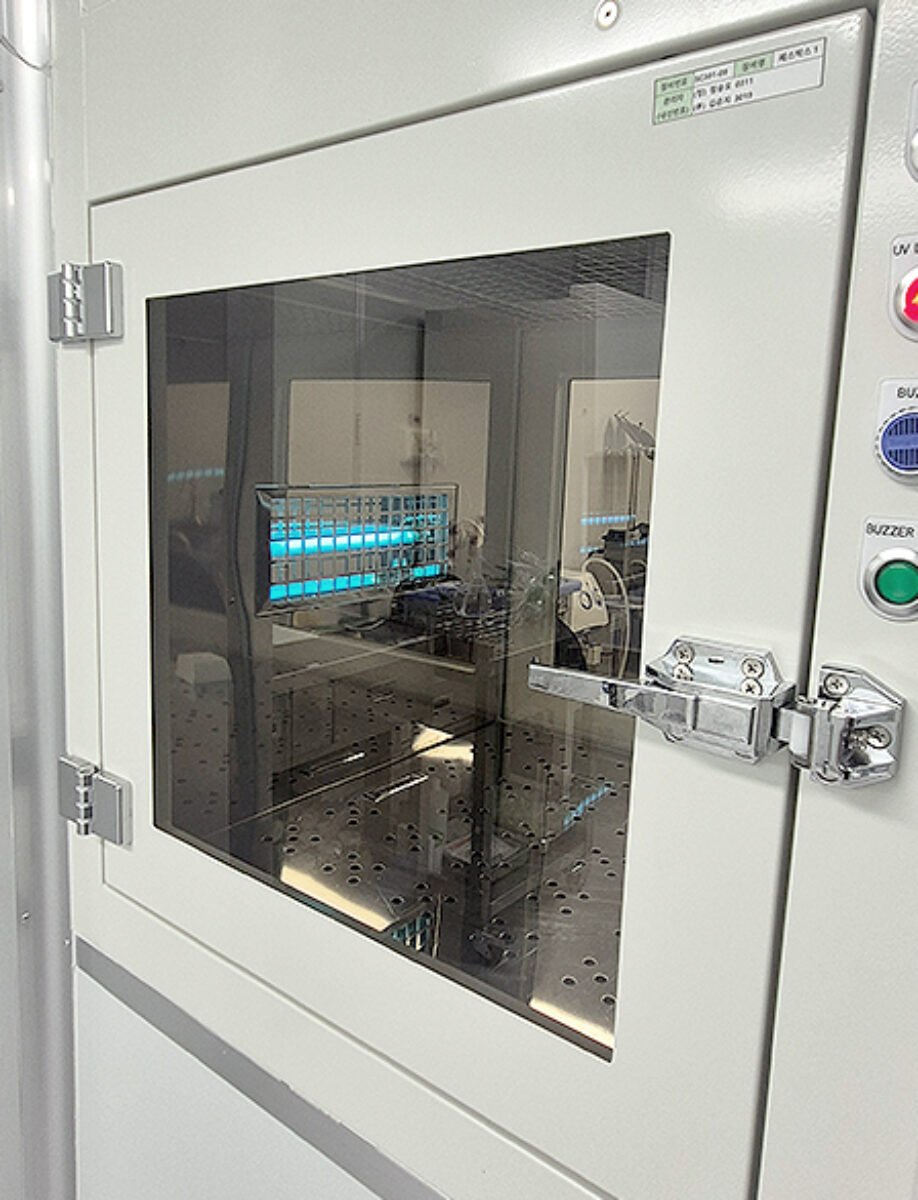
UV lamp sterilization inside the research center's pass box
The blue light inside the pass box is the UV lamp.
02 · Pass Box

Even supplies do not simply walk in

What is a pass box?

A pass box is a transfer chamber used to bring items into the clean area. It removes dust from their surfaces with a strong air stream and sterilizes the surfaces with UV light.

Supplies needed in the lab are not carried in through the door. Items are placed in the pass box, where air is blown over them to remove surface dust and UV light sterilizes them; they are then taken out from the other side.

The two doors are also designed so that they cannot open at the same time, which minimizes mixing of the clean-area air with outside air.

Air-stream dust removalUV surface sterilizationTwo-way interlock
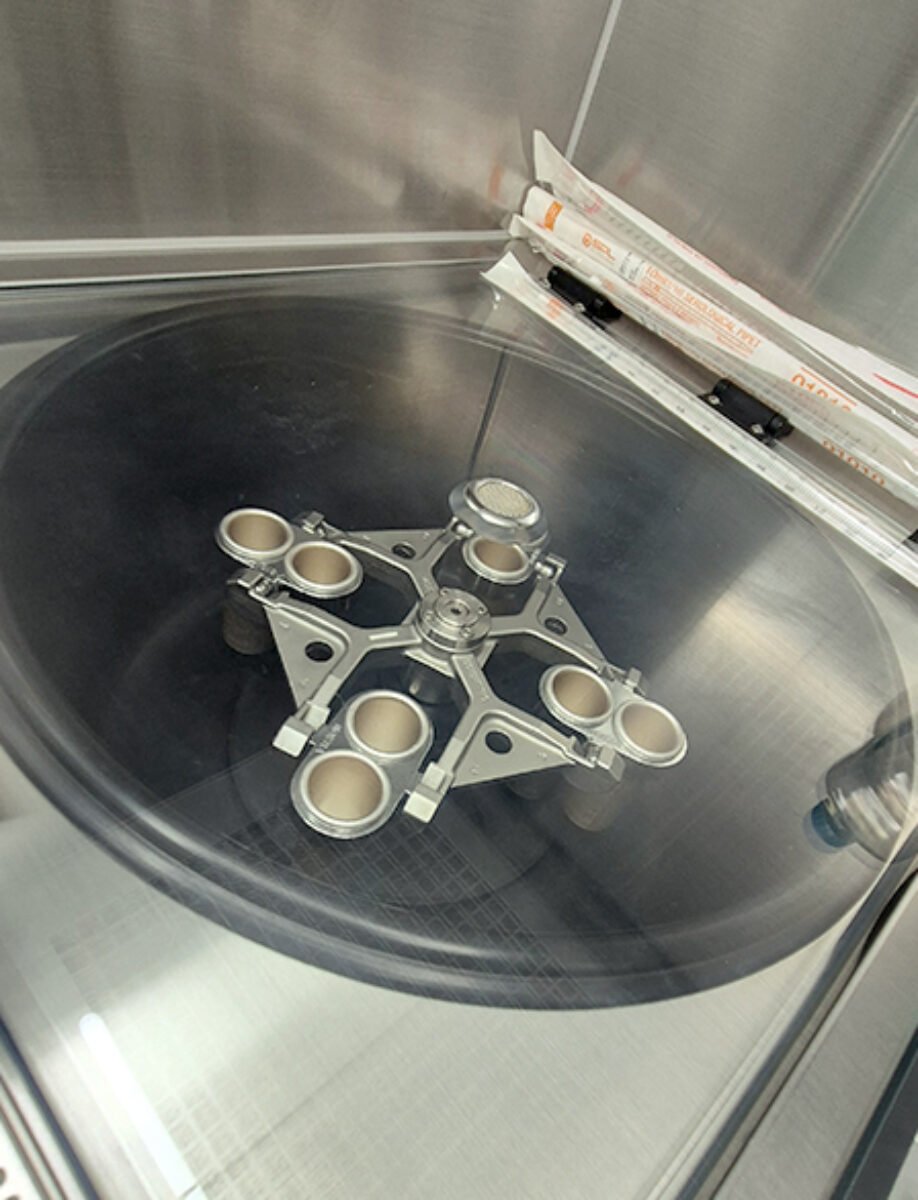
Centrifuge for SVF isolation installed inside a biosafety cabinet
Centrifuge inside the biosafety cabinet
03 · Centrifuge

The first step in isolating SVF

How is SVF isolated?

SVF is obtained by centrifuging the harvested adipose tissue so that the cells separate into layers by weight.

All five steps of the process are shown on the SVF Isolation Process page.

This work is done by hand, following protocol, by researchers with master's or doctoral degrees and more than 10 years of experience.

SVF isolationPerformed by hand by M.S./Ph.D. researchers
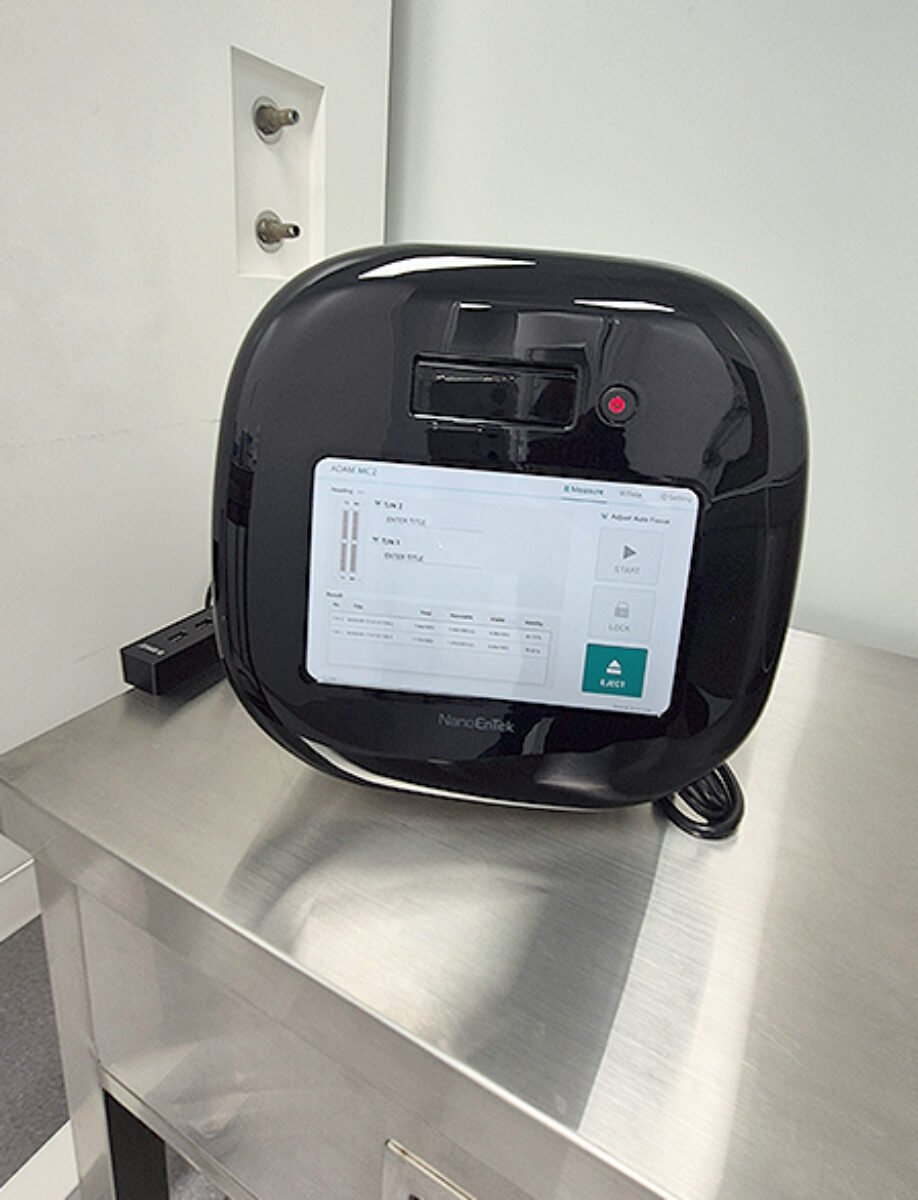
Measuring SVF cell number and viability with a NanoEnTek cell counter
Cell counter (NanoEnTek)
04 · Cell Counter

Answering "How many went in?" with a number

How is the SVF cell count measured?

At SC301 Clinic, a cell counter measures the number and viability of the SVF cells actually injected in every surgery.

In published cases of SVF-assisted breast fat grafting, the number of cells per injection was about 68 to 99 million. It varies with the amount and condition of the harvested fat.

The values measured this way accumulate into graft retention data. Volume changes before and after surgery are checked separately with the 3D precision check of graft retention.

Cell countingCell viability analysisData quantification
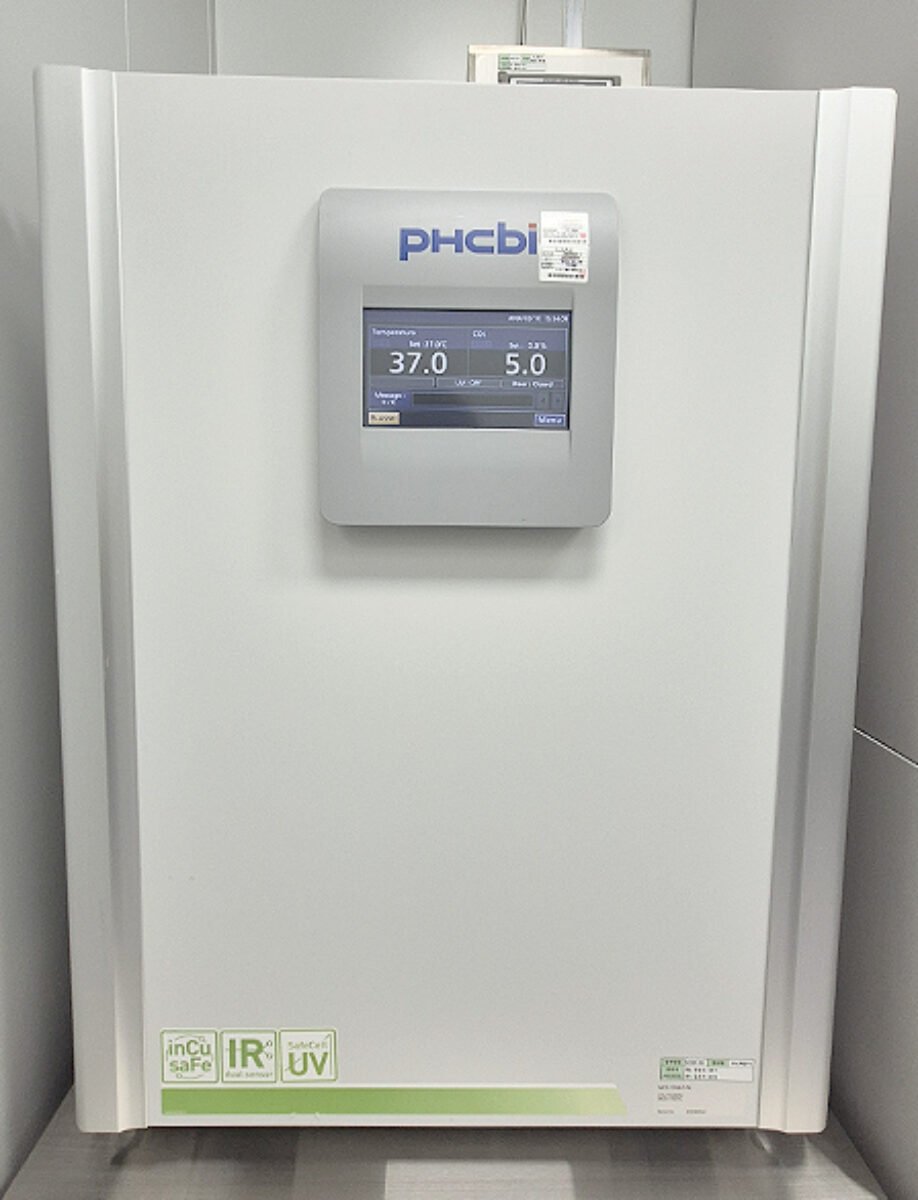
CO2 incubator display set to 37.0 °C and 5.0% CO2
CO₂ incubator, 37.0 ℃ · CO₂ 5.0%
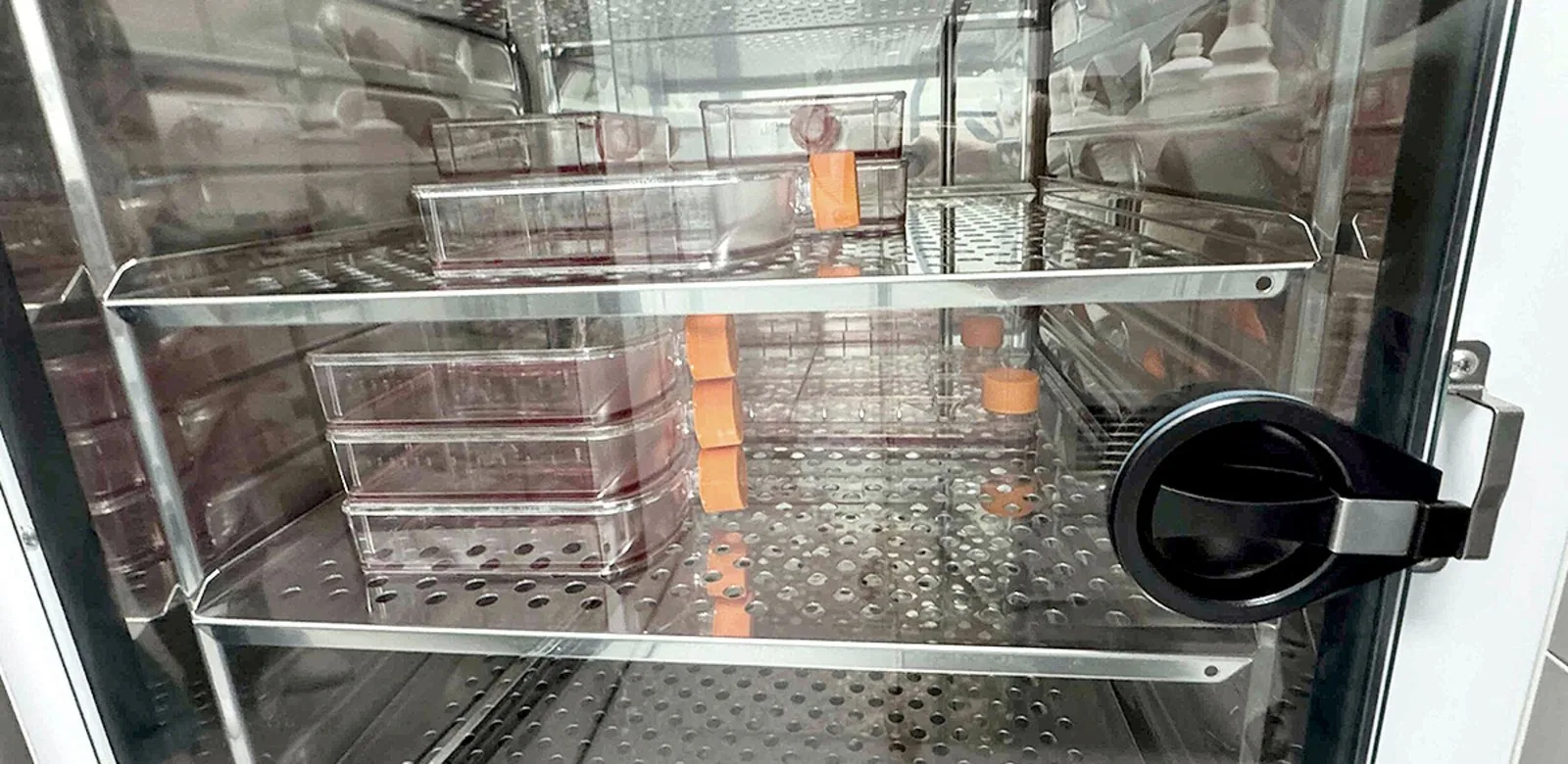
Cell culture flasks on the shelves inside the CO2 incubator
Cell research takes place in the flasks on the inner shelves.
05 · CO₂ Incubator

Where the cells stay

What does a CO₂ incubator do?

A CO₂ incubator keeps conditions similar to those inside the human body constant: a temperature of 37 ℃ and 5% carbon dioxide.

The CO₂ incubator is designed to prevent contamination with a copper-alloy interior (inCu saFe), an IR sensor and a SafeCell UV function.

37 ℃ · CO₂ 5%Contamination-prevention design
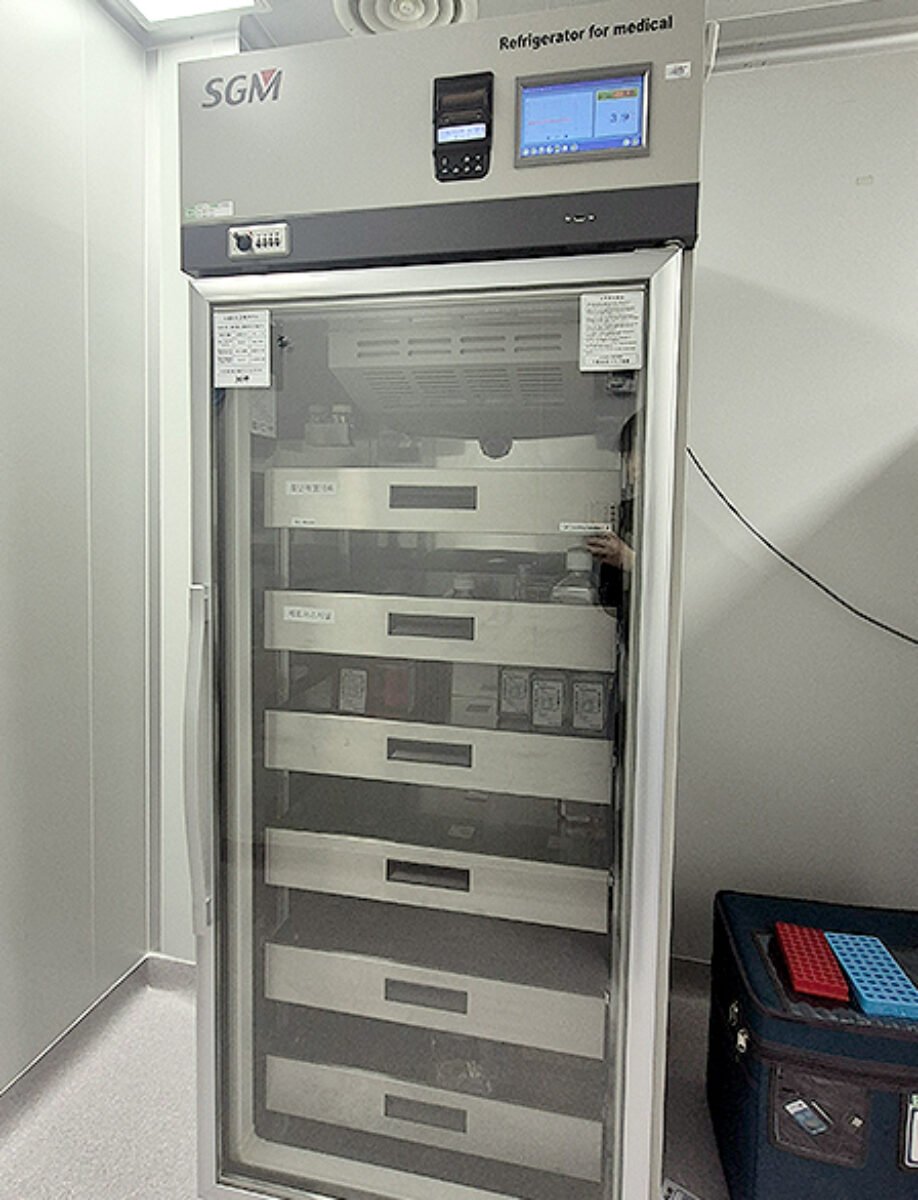
SGM medical refrigerator fitted with a temperature-log printer
Medical refrigerator (SGM)
06 · Medical Refrigerator

A refrigerator that keeps a temperature record

How are research reagents stored?

Reagents and materials used in research are stored in a medical refrigerator that records its temperature continuously.

What sets it apart from an ordinary refrigerator is the record. The display shows the internal temperature at all times, and a printer on top prints out the temperature log so it is kept on file.

Each drawer holds a separate category of items.

Temperature monitoringPrinted logSeparate storage by item
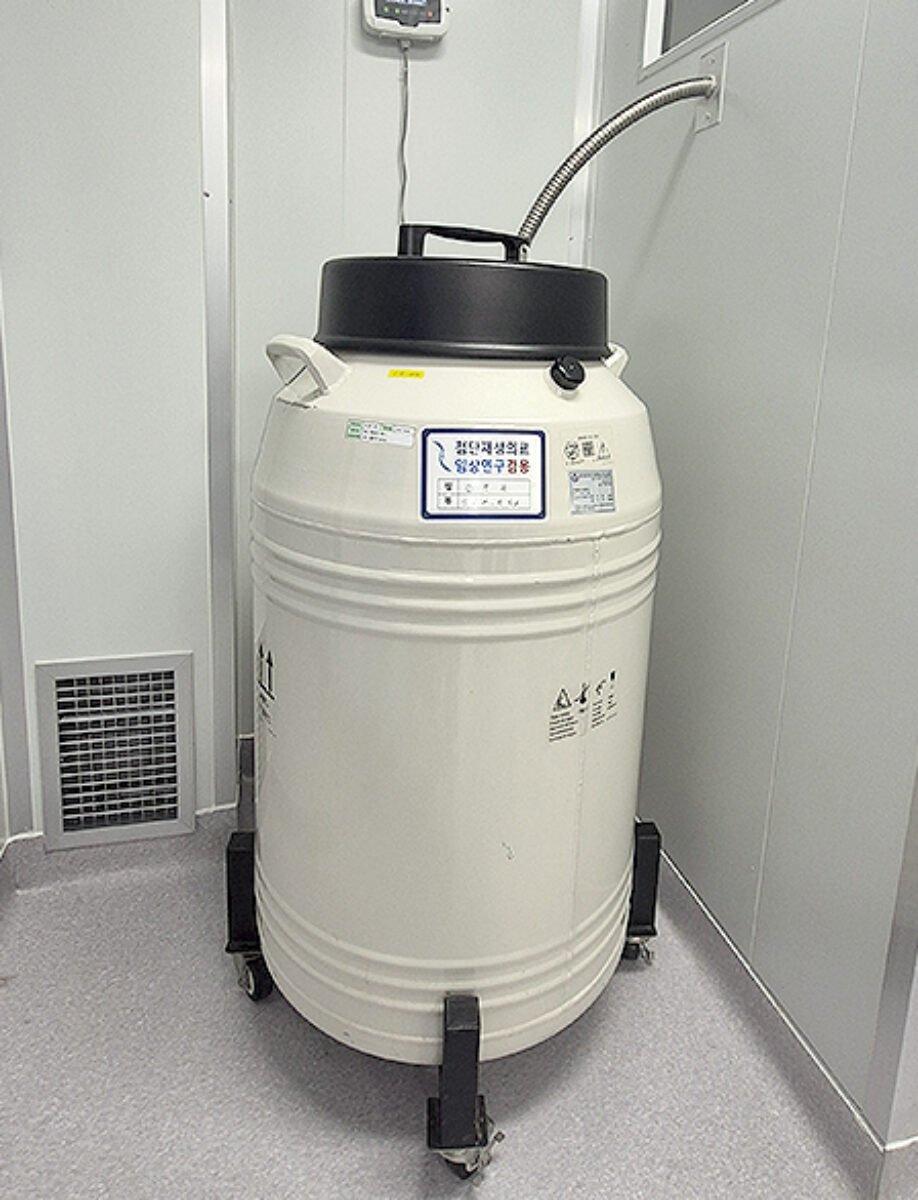
−196 °C LN2 liquid nitrogen tank for SVF cell banking
LN2 (liquid nitrogen) tank
07 · LN2 Tank

Cell banking at −196 °C

At what temperature is SVF cell banking done?

SVF cell banking stores cells cryogenically in a liquid nitrogen (LN2) tank at −196 °C.

Isolated SVF can be stored at this temperature and taken out when it is needed.

In the storage procedure, SVF that has been purified without culture is mixed with a cryoprotectant (DMSO), frozen by lowering the temperature step by step, and then placed in the tank. The tank's temperature and nitrogen level are monitored in real time. When cells are taken out, they are thawed quickly, pass five quality control (QC) checks — appearance, viability, sterility, toxins and function — and have the cryoprotectant washed out before use.

Details of SVF cell banking are available in the Cell Banking guide.

−196 ℃ cryogenic storagePurified without culture5-step QC after thawing
Other equipment

More than 10 types of SVF-related equipment

In SVF extraction, the equipment determines how much the cells are damaged. Besides the seven key pieces of equipment above, these are used for isolation, counting, verification and storage, and for care before and after surgery. The clinic's full equipment list is on the SC301 Equipment System page.

EquipmentProcess stepUse
CELL-3Isolation · purificationCarries out washing, purification, agitation and extraction of adipose tissue to reduce cell damage, and prepares the isolated SVF for immediate grafting
Biosafety cabinet (clean bench)IsolationHouses the centrifuge to reduce the risk of contamination
3D simulation checkBefore · after surgerySimulates volume changes in 3D before surgery for consultation and surgical planning; also used to measure graft retention after surgery (3D precision check)
Hyperbaric oxygen therapy unitAfter surgeryUsed for post-operative recovery care (clinic equipment, not part of the research center)
( Closing )

Results are not decided in the operating room alone

The air in the clean area, the spin of the centrifuge, the numbers on the cell counter, the temperature of the liquid nitrogen. Every step the cells pass through before surgery affects the result. The SC301 Clinic Stem Cell Research Center is where those steps are managed and recorded, one by one.