How SVF is isolated
Five steps from the moment fat enters the research center until it returns to the operating room. The conditions for each step are the values reported in Dr. Shin Dong-jin's paper (Annals of Plastic Surgery, 2023).
Not "was SVF used?" but "how was it isolated?"
SVF (stromal vascular fraction) is a mixture of many cell types found in adipose tissue, including adipose-derived stem cells, endothelial progenitor cells, pericytes and fibroblasts. Separating these cells from fat cells takes several steps of physical and chemical processing.
Even small changes in temperature, processing time, centrifugal force, or the type and concentration of reagents change how many cells are obtained and how active they are. That is why, when results are discussed, the process used and how precisely the cells were isolated are treated as more important variables than whether SVF was used at all. A 2026 meta-analysis (Jefri et al., 893 patients) also found that differences in graft retention rate varied with the isolation method.
The research center standardizes this process, repeats it under the same conditions every time, and keeps a record of each step. SVF isolation alone takes 1 hour 20 minutes to 1 hour 40 minutes, and the whole surgery takes 3 hours on average.
Step by step
Fat leaves the operating room, passes through the research center and returns to the operating room. The number badges show the conditions reported in the paper (Annals of Plastic Surgery, 2023); actual conditions are adjusted within the protocol range according to the amount and condition of the fat.
-
01Operating room
Fat harvesting
Tumescent infusionCannula aspirationA tumescent solution of saline, local anesthetic and a hemostatic agent is infused into the fat layer of the abdomen or thighs, and the fat is then aspirated with a dedicated cannula. Reducing physical damage to the fat cells is the starting point for SVF quality later on.
The harvested fat enters the research center's clean area through the pass box.
-
 02Research center
Purification
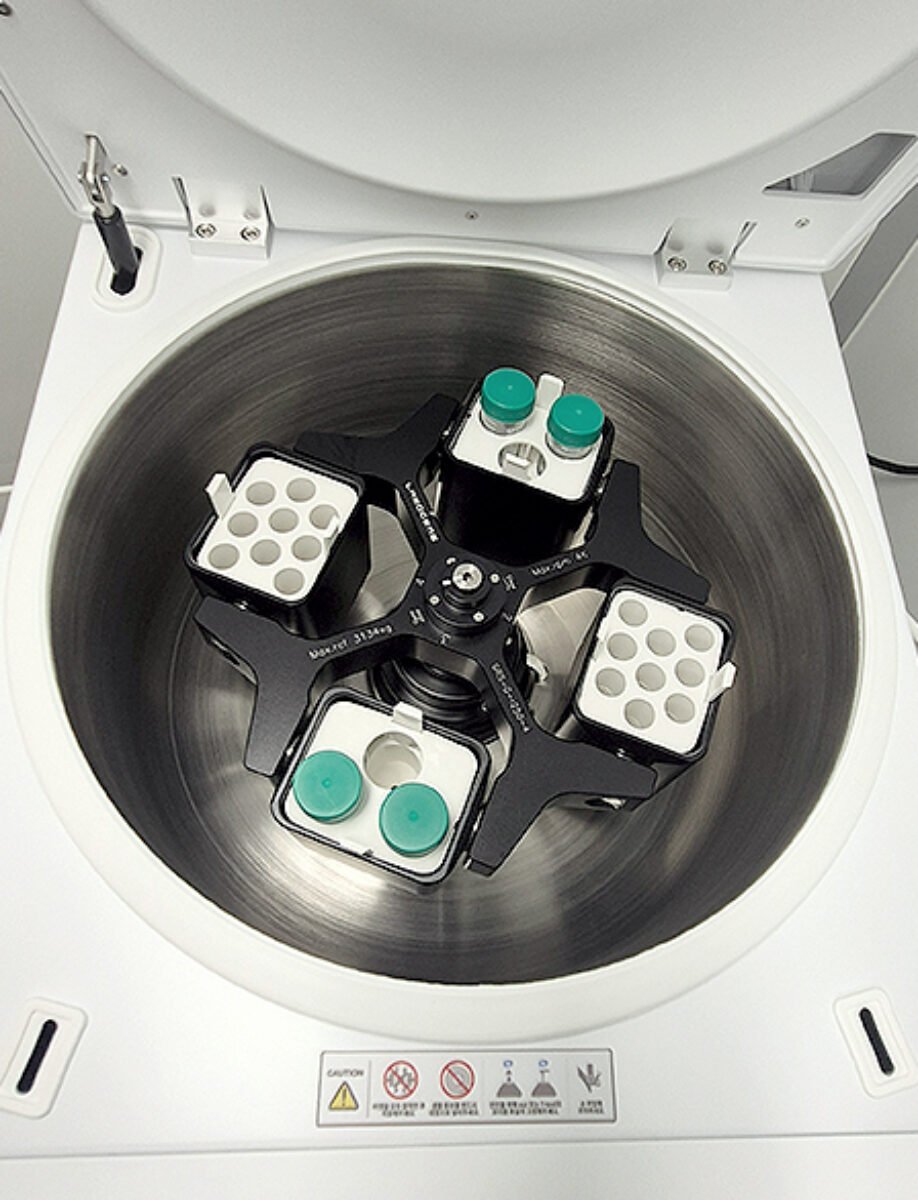
300 g3 minThe harvested fat is centrifuged to remove liquid components such as blood and tumescent fluid, leaving only pure adipose tissue.
A set amount of this is set aside for SVF isolation.
-
03Research center
SVF isolation
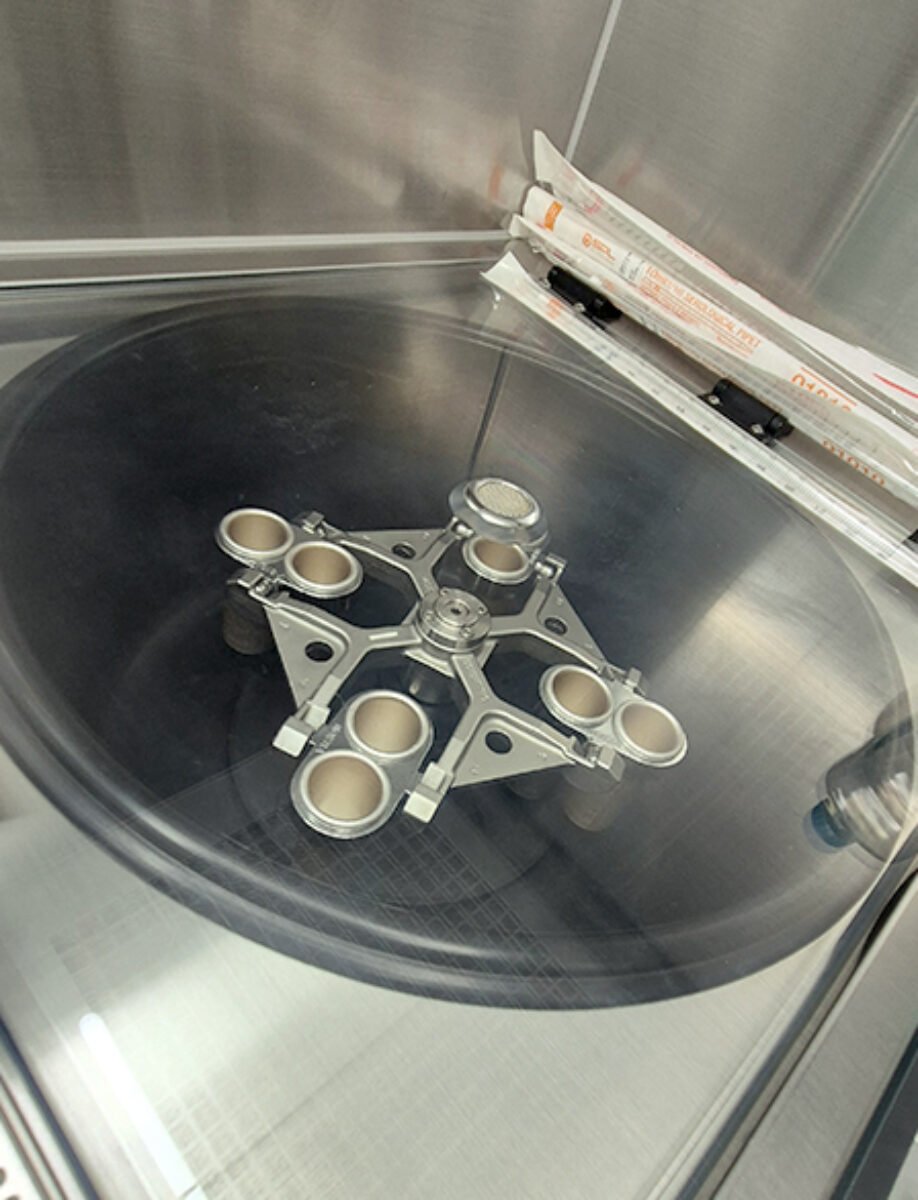
500 g3 minWhen the purified fat is centrifuged again, differences in density separate it into a fat-cell layer and an SVF layer.
The SVF layer (pellet) that settles at the bottom is carefully collected.
-
 04Research center
Cell counting
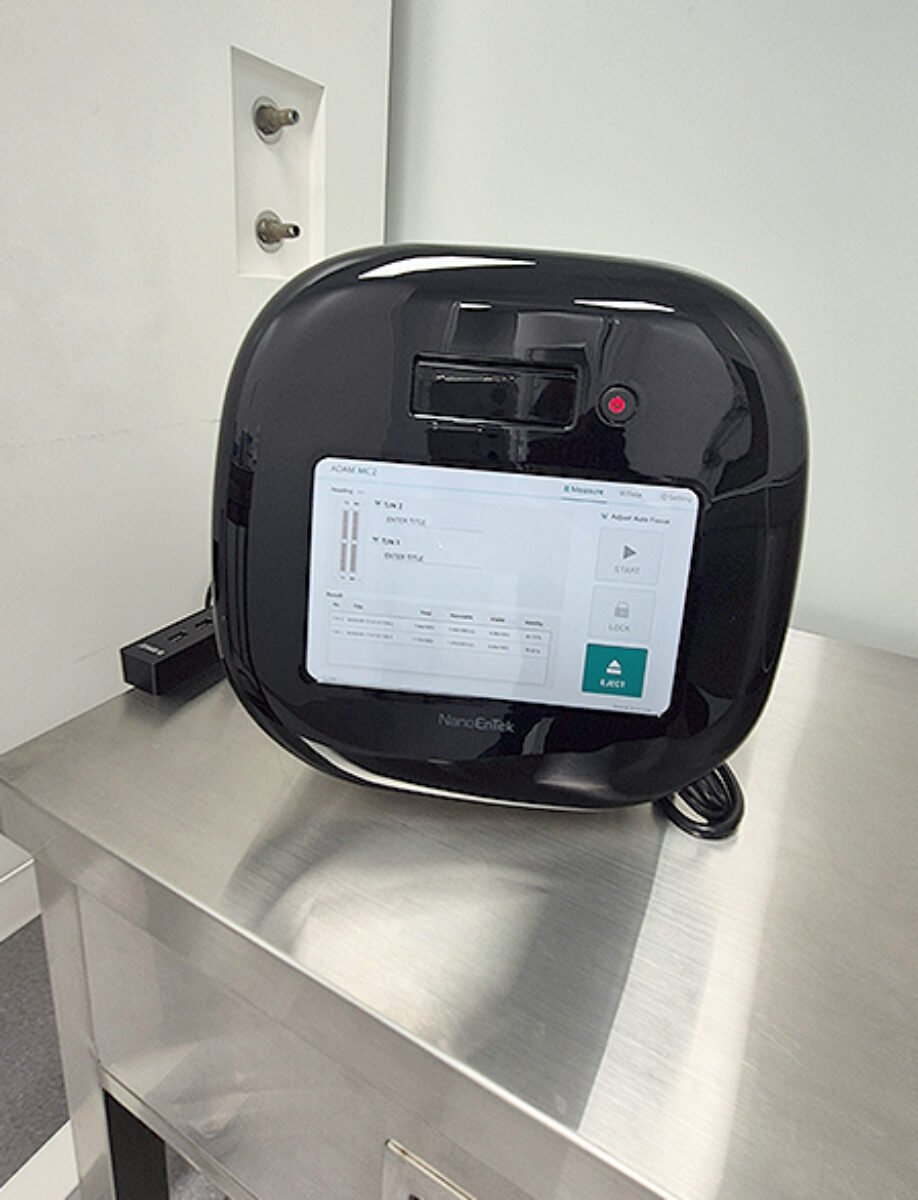
68–99 million cellsViability measuredAfter the concentration is adjusted to the volume to be used, a cell counter measures the number of viable cells and the viability rate, which are recorded for each patient.
The number of cells per injection is based on published breast cases. These figures are used for graft planning and for graft retention data analysis.
-
05Research center → Operating room
Mixing & injection
9 : 0.5 fat : SVFNo outside contractorPurified fat and SVF are mixed at a set ratio to make the final product used for grafting. The ratio is planned according to the purpose of the procedure and the treatment area.
The finished product never leaves the building; it goes straight to the operating room next door and is injected the same day.
View the five steps as a table
| Step | What happens | Purpose | Equipment |
|---|---|---|---|
| 1. Fat harvesting | Tumescent infusion, then cannula aspiration | Obtain source fat with minimal cell damage | — |
| 2. Purification | Centrifugation at 300 g · 3 min | Obtain pure adipose tissue | Centrifuge |
| 3. SVF isolation | Centrifugation at 500 g · 3 min, SVF layer collected | Obtain SVF cells | Centrifuge |
| 4. Cell counting | Cell number and viability measured | Obtain data for graft planning | Cell counter |
| 5. Mixing & injection | Fat + SVF at about 9 : 0.5 | Complete the final graft, same-day injection | — |
Source: Shin DJ. Ann Plast Surg. 2023;90(4):380–384 (Methods section) · SC301 Clinic research note "SVF Isolation Process" (2026-09-15). Photos taken at the SC301 Clinic Stem Cell Research Center.
The conditions this process requires
SVF consists of living cells, so the environment in which the process takes place affects the result. These are the four conditions the research center provides.
Aseptic environment
If the cell-processing space is contaminated, the risk of infection and foreign-body reactions rises. The research center carries out the process in a pressure-controlled clean area, with a pass box and a centrifuge inside a biosafety cabinet. See the clean area
Government-licensed facility
The facility holds Cell Processing Facility License No. 139 (Ministry of Food and Drug Safety) and is a Designated Advanced Regenerative Medicine Institution, No. 재생-1-0049 (Ministry of Health and Welfare). See licenses & designations
One-stop, in-house
From harvesting to isolation and mixing, nothing is sent to an outside facility. Cells lose activity the longer they stay outside the body, so everything is completed the same day in the research center next to the operating room.
Dedicated research staff
Automated equipment alone does not do the job. Researchers with master's or doctoral degrees and more than 10 years of experience perform and record each step themselves. See the research team
Frequently asked questions about the process
To watch it on video, see the SVF extraction video (YouTube, Korean).
Does a higher cell count always lead to a better result?
A higher cell count can favor graft retention, but cell count alone does not determine the result. The characteristics of the cells and the condition of the graft site, as well as post-operative care and lifestyle during recovery, can also significantly affect graft retention. It is therefore important to secure enough cells and to follow appropriate post-operative care. Article on graft retention rate
Is it a problem if it takes a long time from harvesting to grafting?
In cell processing, precision and expertise in the isolation process matter as much as saving time. At SC301, specialized research staff isolate and process the cells by hand, following set procedures and conditions that take the characteristics of the cells into account.
The research center is also located right next to the operating room, which cuts unnecessary transfer and waiting time, and the entire process from harvesting to grafting is managed systematically.
Medically reviewed by Dr. Shin Dong-jin (Chief Director, SC301 Clinic · Medical License No. 44215). This content is provided for information about the process and was written in compliance with the Medical Service Act and related laws. Actual process conditions and results may vary depending on the condition of each individual's fat.
Isolated cells are recorded as numbers
The cell numbers and viability rates measured in step 4 have built up into about 9,000 graft retention records since 2007. How this data became published papers is shown on the Research page.